
— Journal · Roasting · 4 min read
The case for medium roast.
Why we resist the dark-roast default — and what you actually taste when you let the bean speak.
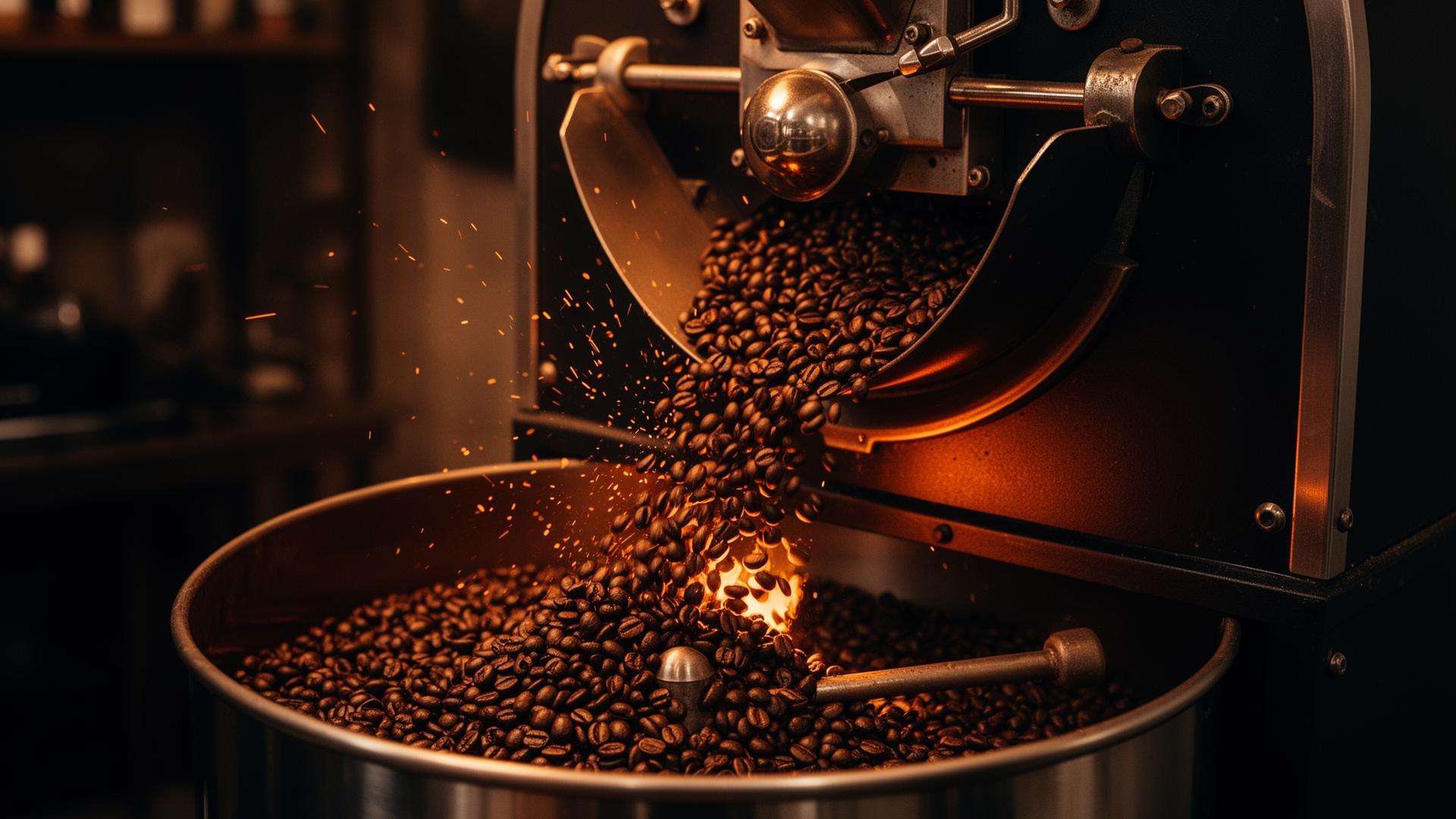
Dark roast sells itself on familiarity — bold, smoky, unmistakable in the cup. It is also, in our view, the fastest way to waste a genuinely exceptional coffee. When a bean has travelled this far — grown at 1,700 to 1,800 metres in Nyeri, Kirinyaga or Murang'a, hand-picked, fully washed and carefully dried — roasting it dark enough to taste like char is simply throwing that work away.
What a dark roast actually does
Push a roast past second crack and you are not adding flavour, you are removing it. The origin character — the acidity, the varietal-specific notes, the terroir that makes a Nyeri lot taste different from a Murang'a lot — gets burned off and replaced with a generic roast flavour that tastes the same no matter what bean you started with. At that point, you are drinking the roast, not the coffee.
What medium roast preserves
We roast every Baobab lot to a medium profile specifically because it is the point where the origin is fully developed — sugars caramelised, body built — but before the bean's own character is roasted away. That is what lets the bright acidity, dark cocoa and citrus notes that define 100% single-origin SL28 and SL34 Arabica actually reach your cup, instead of being buried under smoke and bitterness.
How we profile each lot
Every batch is roasted on our Nairobi drum roaster within 30 days of arrival and shipped within 48 hours of roast — freshness matters as much as the roast curve itself. We profile each lot individually rather than running one generic curve across the whole catalogue: Kenya Kahawa No.1 pulled a touch lighter to protect its fruit-forward intensity, Espresso built with extra density to hold up under pressure extraction, Breakfast and Gourmet each tuned to their own origin.
The result is a cup with a clear address — a hillside, a harvest, a hand that picked it — rather than a uniform roast flavour that could have come from anywhere.